The National Disability Insurance Scheme (NDIS) provides essential supports to Australians with disabilities, enabling them to lead a more independent and fulfilling life. These supports are designed to address the individual needs of participants, allowing them to pursue their goals, whether they are related to personal development, education, or employment.
NDIS supports are broadly categorized into different types, each aimed at meeting specific needs. The core categories of supports include assistance with daily living, transport supports, social and community participation, and improved life skills. Each of these categories plays a crucial role in helping participants navigate their day-to-day activities and broader life aspirations.
Assistance with daily living covers essential tasks that individuals may find challenging, such as personal care, meal preparation, and household tasks. This support can significantly enhance the quality of life for participants by ensuring that they can manage their personal needs effectively. Furthermore, transport supports offer participants the means to travel safely and conveniently, which is vital for accessing services and participating in community activities.
Social and community participation is another critical element of NDIS supports, as it encourages individuals to engage with their communities. This type of support can help participants build social connections and engage in recreational activities that contribute to their overall well-being.
Additionally, improved life skills supports focus on building the capabilities that participants need to manage their lives independently. Through skill development and training, individuals can become more self-sufficient and confident in their abilities.
In essence, NDIS supports are tailored to assist participants in overcoming barriers and achieving their individual goals, thereby promoting independence and community inclusion. Understanding these supports is the first step in navigating the NDIS and effectively utilizing the available resources to enhance quality of life.
Selecting the right support provider is a critical decision for participants in the National Disability Insurance Scheme (NDIS). The provider plays a pivotal role in the delivery of assistance and the overall quality of support received. A well-chosen provider can significantly impact a participant’s ability to achieve their personal goals, thus enhancing their overall well-being and quality of life.
One of the primary reasons for the importance of this choice lies in the diverse nature of individual needs among NDIS participants. Each person has unique requirements, preferences, and aspirations. Thus, having a support provider that is not only capable but also attuned to these specific needs is essential. The right provider should be flexible and willing to tailor their services to fit the individual circumstances of each participant. This ensures that the support received is not only relevant but also empowering.
The alignment between the support provider’s offerings and the participant’s goals is essential. When a provider understands and supports the participant’s objectives, it fosters a collaborative environment where trust and rapport can develop. This foundation encourages effective communication, essential for delivering high-quality support services. Furthermore, a provider that emphasizes holistic support typically includes various services ranging from personal support to skill development, tailored to assist participants in their endeavors.
Moreover, choosing the right provider can also influence the participant’s access to resources and opportunities within the community. Support providers often have networks and partnerships that can facilitate connections for participants, enhancing their engagement and social inclusion. Therefore, it is prudent for individuals seeking support under the NDIS to thoroughly evaluate potential providers, ensuring that they align with personal needs and aspirations for a more fulfilling experience.
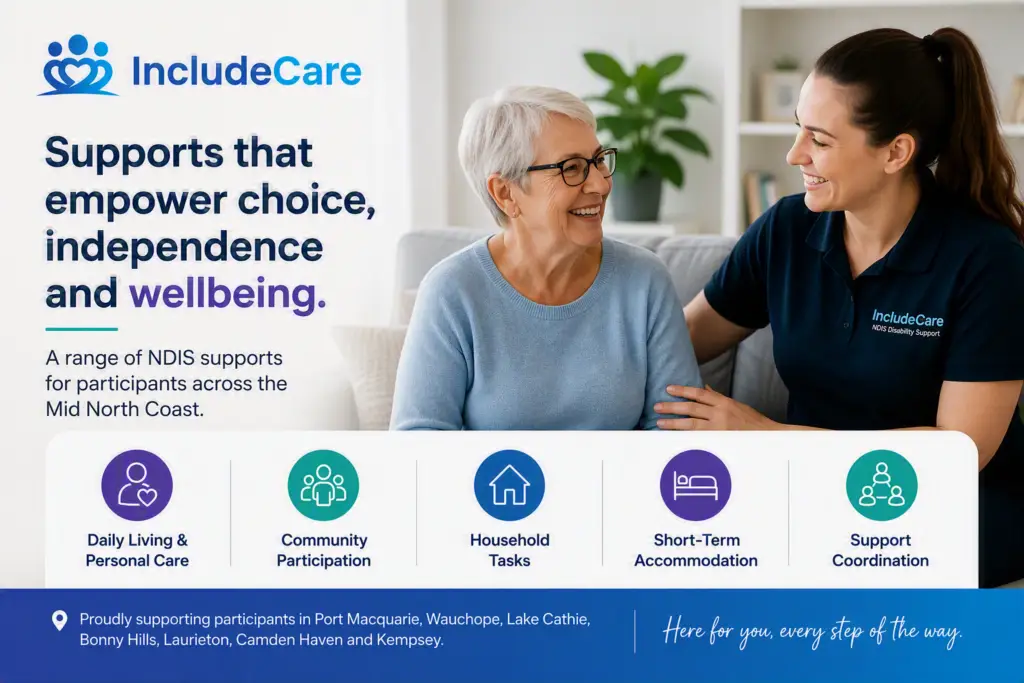
Includecare offers a comprehensive range of supports designed to cater to the diverse needs of individuals across the Mid North Coast, particularly in locales such as Port Macquarie and Kempsey. These services are tailored to enhance daily living and ensure participants lead fulfilling lives. With an emphasis on person-centered care, Includecare prioritizes the unique requirements of each individual, providing tailored solutions that aim to improve their quality of life.
Among the services available, Includecare facilitates personal care, which includes assistance with daily activities such as grooming, bathing, and meal preparation. This support is essential for individuals who require assistance in maintaining their independence, enabling them to live safely and comfortably in their own homes. Additionally, they offer support with household tasks, helping individuals manage responsibilities such as cleaning and shopping, which can be challenging without assistance.
Another key area of focus for Includecare is community access. The organization encourages social inclusion by providing transport services and organizing community outings. These activities significantly enhance the social well-being of participants, allowing them to engage with their local communities and foster relationships with peers. Furthermore, Includecare’s range of therapeutic services, including speech and occupational therapy, play a crucial role in developing essential skills that can further contribute to an individual’s independence.
Includecare also emphasizes the importance of supporting individuals in achieving their personal goals. Whether it’s improving physical health, increasing social engagement, or gaining vocational skills, their supports are designed to empower individuals and facilitate growth. The dedicated team at Includecare is committed to working collaboratively with participants, ensuring that they receive the assistance needed to thrive within their community. By providing these varied supports, Includecare aims to enhance the overall quality of life for NDIS participants across the Mid North Coast.
Choosing the right NDIS support provider is a critical decision that directly impacts the quality of services received. It is essential to consider several factors to ensure a proper fit for your unique requirements. Here are important tips to guide you in selecting the most suitable provider.
Start by understanding your specific needs and goals. Take the time to clearly define what types of support you require and your personal objectives within the NDIS framework. This understanding will help you articulate your expectations to potential providers.
When you begin to explore different NDIS support providers, it is beneficial to ask relevant questions during your initial consultations. Inquire about their experience, qualifications, and the range of services they offer. It is also crucial to understand their approach to care, including whether they prioritize person-centered practices that align with your preferences.
Examine the differences between various service providers. Some agencies may specialize in specific areas, such as mental health, physical disabilities, or social support, while others offer a broader range of services. Assessing their specializations can help you find a provider that aligns closely with your individual needs.
Additionally, consider the compatibility of the provider’s values with your own. You want to work with a team that respects your choices and fosters an empowering environment. It is advisable to look for feedback from current or previous clients, as recommendations can provide insight into the provider’s reliability and quality of service.
Finally, evaluate the accessibility and responsiveness of the provider. This includes assessing communication methods and availability, which are vital for effective collaboration in your support journey. By taking the time to consider these aspects, you can make a well-informed decision that ensures you receive the best possible support under the NDIS.